
A healthy smile plays an important role in your confidence, appearance, and overall oral health. However, damaged, weakened, or missing teeth can affect more than just the way you look. They may make chewing difficult, affect speech, and create problems with the alignment of nearby teeth. Fortunately, modern dentistry offers reliable solutions to restore both the appearance and function of your teeth. Dental crowns and bridges are two commonly used treatments that help address these concerns.
Although both treatments are designed to restore your smile, they serve different purposes. Understanding their uses, differences, and benefits can help you make an informed decision about your dental care.
WHAT ARE DENTAL CROWNS?
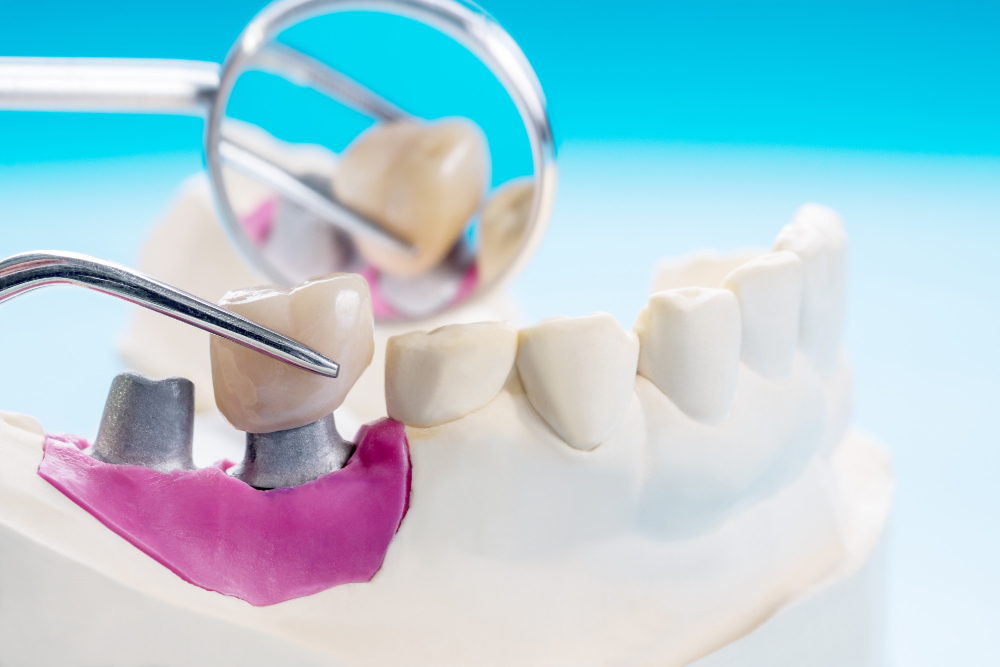
A dental crown is a custom-made covering placed over an existing tooth to restore its shape, strength, size, and appearance. It covers the visible portion of the tooth above the gum line and acts like a protective cap.
Crowns are generally recommended when a tooth is too damaged or weakened to be restored with a regular filling. They help protect the remaining tooth structure while allowing you to chew and speak comfortably.
Depending on your dental condition and personal requirements, crowns can be made from different materials, including ceramic, porcelain, metal, or a combination of materials. Tooth-coloured crowns are particularly popular because they blend naturally with surrounding teeth.
WHEN DO YOU NEED A DENTAL CROWN?
Your dentist may recommend a crown when a tooth requires additional protection or structural support. Some common situations include:
- Severely decayed teeth: When tooth decay affects a large portion of the tooth, a crown can restore its structure after the damaged area is treated.
- Cracked or broken teeth: Crowns help cover and protect teeth that have suffered significant damage.
- After root canal treatment: A tooth that has undergone root canal treatment may require a crown for additional protection, depending on its condition.
- Worn-down teeth: Crowns can restore teeth affected by excessive grinding or long-term wear.
- Cosmetic improvement: They can improve the appearance of teeth with significant discolouration, irregular shapes, or other visible defects.
If you are looking for a Dental clinic in Srinagar colony, choose a facility that provides a proper dental examination and explains the available treatment options before recommending a crown.
WHAT ARE DENTAL BRIDGES?
A dental bridge is a fixed dental restoration used to replace one or more missing teeth. It fills the empty space by placing an artificial tooth between supporting teeth or dental implants.
A traditional dental bridge usually consists of artificial teeth, known as pontics, supported by crowns fitted over the neighbouring natural teeth. These supporting teeth are called abutment teeth.
Bridges are designed to restore the appearance of your smile and improve everyday activities such as chewing and speaking. They also help prevent neighbouring teeth from gradually shifting into the empty space.
Dental bridges are available in different materials, including porcelain, ceramic, metal, and porcelain-fused-to-metal options. The most suitable choice depends on the location of the missing tooth, the condition of surrounding teeth, and your dental requirements.
WHEN DO YOU NEED A DENTAL BRIDGE?
A dental bridge may be recommended if you have lost one or more teeth and want a fixed replacement. Missing teeth can affect your bite, facial appearance, and ability to chew certain foods.
A bridge may be suitable when a person has healthy supporting teeth or when dental implants are not the preferred treatment option. It can replace teeth lost due to tooth decay, gum disease, accidental injury, or other dental conditions.
Before recommending a bridge, the dentist examines the surrounding teeth, gums, and jaw structure to determine whether they can provide adequate support.
DENTAL CROWNS vs DENTAL BRIDGES:
What Is the Difference?
Although crowns and bridges are used to restore damaged or missing teeth, their functions are different. A dental crown covers and protects an existing tooth, whereas a dental bridge replaces a missing tooth by connecting an artificial tooth to supporting structures.
Crowns are generally recommended for teeth that are still present but require protection or restoration. Bridges are recommended when one or more teeth are missing and the surrounding teeth or implants can support a replacement.
Another important difference is the treatment approach. A crown usually requires preparing the affected tooth before placing the restoration. A traditional bridge requires preparing the supporting teeth on either side of the gap. However, implant-supported bridges follow a different procedure because they are supported by dental implants rather than natural teeth.
Both treatments are fixed restorations, meaning they are not designed to be removed daily by the patient.
KEY BENEFITS OF DENTAL CROWNS AND BRIDGES
Dental crowns and bridges offer several advantages when they are recommended appropriately and maintained with good oral hygiene.
Dental crowns offer the following benefits:
- Protect weakened teeth from further damage.
- Restore the natural shape and size of damaged teeth.
- Improve chewing ability and overall tooth function.
- Enhance the appearance of discoloured or irregular teeth.
- Provide additional support after certain dental procedures.
Dental bridges offer the following benefits:
- Replace missing teeth with a fixed restoration.
- Improve chewing and speaking ability.
- Restore the appearance of your smile.
- Help maintain the position of neighbouring teeth.
- Support a more balanced bite by filling empty spaces.
The success and lifespan of either restoration depend on factors such as the materials used, the condition of the supporting teeth, oral hygiene, and regular dental check-ups.
WHAT IS THE PROCEDURE FOR GETTING CROWNS AND BRIDGES?
The treatment process generally involves a dental examination, preparation, and placement of the final restoration.
For a dental crown, the dentist first examines the affected tooth and removes any decayed or damaged portions. The tooth is then shaped to create enough space for the crown. An impression or digital scan is taken to prepare a restoration that fits your tooth properly. A temporary crown may be placed while the permanent one is being prepared. During a follow-up appointment, the permanent crown is fitted and checked for comfort and bite alignment.
For a dental bridge, the dentist examines the missing tooth area and evaluates the supporting teeth. In a traditional bridge procedure, the supporting teeth are carefully prepared, and impressions or digital scans are taken. A temporary bridge may be provided until the final restoration is ready. The permanent bridge is then fitted and adjusted to ensure a comfortable bite.
The number of appointments and overall treatment time may vary depending on the complexity of the case and the type of restoration selected.
HOW TO CARE FOR DENTAL CROWNS AND BRIDGES
Proper care is essential to maintain your dental restorations and protect the natural teeth underneath them. Although crowns and bridges are made from durable materials, they still require regular cleaning and professional monitoring.
Brush twice daily using a soft-bristled toothbrush and fluoride toothpaste. Clean between your teeth every day, paying particular attention to the areas around crowns and underneath bridges. Special flossing tools or interdental brushes may help clean difficult-to-reach areas.
Avoid biting hard objects such as ice, hard sweets, or nutshells, as excessive pressure may damage the restoration. If you grind your teeth while sleeping, your dentist may recommend a night guard for protection.
Regular dental check-ups help identify early signs of damage, gum problems, or changes in the fit of your restoration. A qualified Dentist in Srinagar colony can guide you on maintaining your crowns and bridges according to your individual oral health needs.
CHOOSING THE RIGHT DENTAL TREATMENT
The choice between a crown and a bridge depends on whether the tooth is damaged or missing, the condition of surrounding teeth, your gum health, and your overall dental needs.
A crown may be the appropriate solution when a natural tooth needs protection, while a bridge may be considered when one or more teeth are missing. In some cases, dental implants or other restorative options may also be suitable.
An experienced dental professional will assess your condition, explain the advantages and limitations of each treatment, and recommend an option that supports your long-term oral health.
RESTORE YOUR SMILE WITH THE RIGHT DENTAL CARE
Damaged and missing teeth should not prevent you from enjoying your favourite foods or smiling with confidence. Dental crowns and bridges provide effective restorative options to improve tooth function and appearance when supported by proper diagnosis and care.
Visit Sumukha Hospitals, a trusted Dental hospital in Hyderabad, for a comprehensive dental evaluation and personalised treatment guidance. Schedule your consultation today and take the first step towards a healthier, stronger, and more confident smile.
Frequently Asked Questions (FAQs)
1. How long do dental crowns and bridges last?
Dental crowns and bridges can last many years with proper care. Their lifespan depends on the material, oral hygiene, biting habits, and the health of supporting teeth. Regular dental visits help maintain their condition.
2. Is getting a dental crown or bridge painful?
The procedures are generally performed under local anaesthesia to minimise discomfort. Some temporary sensitivity or mild soreness may occur after treatment, but it usually improves as the mouth adjusts.
3. Can a dental crown be placed on a missing tooth?
No. A conventional crown covers an existing natural tooth or a dental implant. When a tooth is missing, a bridge or implant-supported restoration may be considered.
4. Can I eat normally after getting a dental crown or bridge?
Yes. Once the permanent restoration is fitted and you have adjusted to it, you can generally eat most foods comfortably. However, avoiding excessively hard or sticky foods is advisable.
5. Do dental crowns and bridges require special cleaning?
They do not usually require complicated maintenance. Brush twice daily, clean between your teeth, and use suitable tools to clean underneath bridges. Regular professional check-ups are also important.